Lagos State never slows down. Roads stay busy day and night. New housing estates expand outward. Commercial zones grow upward. At the same time, local governments face strong pressure to repair old roads and build new ones faster. In this context, many contractors ask a practical question: can a 100 TPH asphalt mixing plant really support city road projects in Lagos State?
This is not a theoretical discussion. It is a real decision that affects budgets, schedules, and long-term competitiveness. To answer it clearly, we need to look at Lagos road demand, project scale, production rhythm, and on-site realities. More importantly, we need to view the issue from the contractor’s perspective, not just from equipment specifications.
Before discussing plant capacity, we must understand what “city road projects” mean in Lagos. These projects vary widely, and capacity requirements change accordingly.
In Lagos State, urban road projects usually include arterial roads, collector roads, access roads, and internal estate roads. Some projects focus on rehabilitation and resurfacing. Others involve full-depth reconstruction.
Most city road contracts do not require continuous highway-scale output. Instead, they require steady daily supply, flexible scheduling, and reliable quality. This distinction matters.
In many Lagos city projects, daily asphalt demand ranges from 600 to 1,200 tons per day. This depends on lane width, pavement thickness, and traffic management constraints.
For example, resurfacing a 1 km dual-lane urban road with a 50 mm asphalt layer often needs around 700–900 tons of asphalt. Contractors usually spread this over several days to reduce traffic disruption.
This demand profile already suggests that ultra-large plants are not always necessary. Instead, a balanced plant often performs better, especially when you compare options from various asphalt plant manufacturers.
Now let us translate “100 TPH” into real working output. This step helps decision-makers avoid common misunderstandings.
A 100 TPH asphalt mixing plant means it can produce up to 100 tons of hot mix asphalt per hour under ideal conditions. However, no urban project runs under ideal conditions all day.
In Lagos, realistic operating time often ranges from 7 to 9 hours per day. Traffic control, material supply, weather, and site coordination all affect output.
Under practical site conditions, a 100 TPH plant usually delivers 70–85 TPH on average. Over an 8-hour shift, this equals roughly 560–680 tons per day.
If the contractor runs two shifts or extends working hours at night, daily output can exceed 1,000 tons. Lagos authorities often encourage night paving to reduce congestion, which supports this approach.
Therefore, from a production standpoint, a 100 TPH asphalt mixing plant often performs like many best asphalt plant configurations you find in today’s market.
At this point, it may seem that capacity answers everything. However, experienced contractors know that asphalt production is not only about tons per hour.
In Lagos, logistics often define success or failure. Material delivery delays, traffic congestion, and site access challenges affect productivity more than nameplate capacity.
This is why plant flexibility becomes just as important as output, especially when handling complex urban contracts.
City road projects rarely allow continuous paving. Crews often stop and start due to traffic control windows, utility coordination, or weather.
A 100 TPH plant responds well to these conditions. It heats up quickly. It adjusts output without large waste. It supports intermittent production better than oversized plants.
As a result, contractors reduce fuel loss and material waste, making operations sharper and more predictable.
Lagos is dense. Land is expensive. Transporting hot mix over long distances increases risk and cost. Therefore, plant location matters.
This leads to another important question: should the plant be stationary or mobile? In most Nigeria projects, this choice affects schedule and cost significantly.
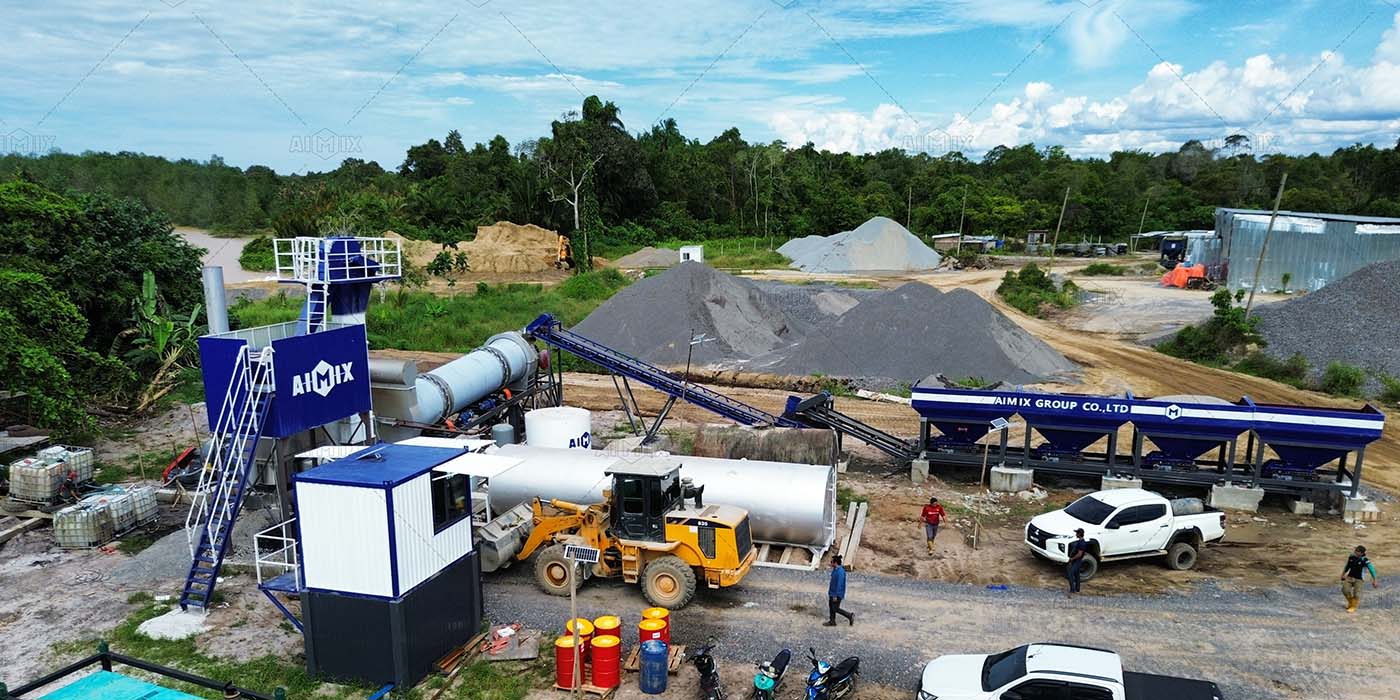
Many contractors prefer a semi-mobile or containerized 100 TPH asphalt mixing plant. This option allows relocation between districts as projects move.
Shorter hauling distances improve mix temperature control. They also reduce fuel consumption and truck turnaround time.
In fact, here in West Africa, more contractors choose a 100 TPH asphalt plant in Nigeria precisely for these mobility and logistics advantages.
Urban roads in Lagos face heavy axle loads, high temperatures, and frequent braking. Therefore, asphalt quality cannot be compromised.
A 100 TPH plant usually supports multiple mix designs, including wearing course, binder course, and base course. Mix flexibility helps contractors meet a range of project specifications.
Most Lagos projects follow Federal Ministry of Works or state-level specifications. These require stable gradation, consistent temperature, and accurate bitumen dosing.
Modern 100 TPH plants include reliable weighing systems, precise burners, and automated controls. These features help contractors meet inspection requirements and reduce rework.
From a compliance standpoint, capacity and quality align well at this scale.
Every contractor in Lagos balances project margins carefully. Equipment choice directly affects operating cost.
A 100 TPH asphalt mixing plant offers a strong balance between investment and return. It avoids the high capital cost of large plants while delivering sufficient output.
Fuel consumption, maintenance, and manpower costs remain manageable at 100 TPH. At the same time, the plant supports both public and private projects.
Contractors can supply municipal works during the day and private developments at night. This improves asset utilization and shortens payback time.
From a business perspective, this flexibility matters more than raw capacity.
Urban projects face increasing environmental scrutiny. Noise, dust, and emissions affect nearby communities.
Modern 100 TPH asphalt mixing plants often include baghouse filters, low-noise burners, and enclosed conveyors. These features help contractors operate within urban limits.
This compliance reduces complaints and project interruptions.
To stay realistic, we must also define the limits.
If a contractor handles multiple large arterial roads at the same time, daily demand may exceed 1,500 tons. In such cases, a higher-capacity plant or multiple plants may perform better.
However, for single-project execution or phased urban programs, 100 TPH remains practical and efficient.
When we consider production needs, logistics, quality, cost, and urban constraints together, the answer becomes clearer.
Yes, a 100 TPH asphalt mixing plant can effectively supply many city road projects in Lagos State. It matches typical daily demand. It adapts well to traffic-controlled schedules. It balances cost and output.
Most importantly, it aligns with how urban construction actually works in Lagos.
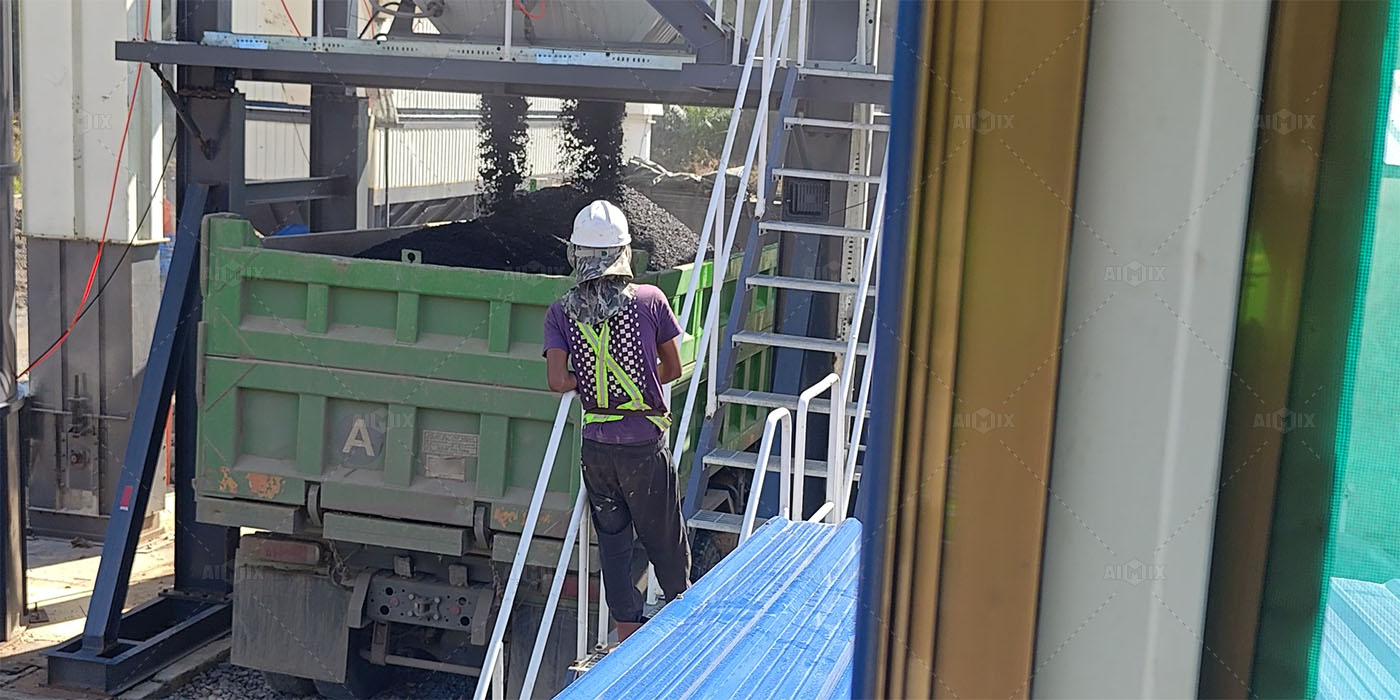
Even the right capacity plant needs strong support. Installation, training, commissioning, and after-sales service all affect long-term performance.
This is where choosing an experienced asphalt plant manufacturer makes a difference. At AIMIX, we focus on practical solutions, not just specifications. We help contractors evaluate project demand, site conditions, and growth plans. Based on that, we recommend the most suitable asphalt mixing plant configuration.
If you are planning city road projects in Lagos State and considering a 100 TPH asphalt mixing plant, our team is ready to support you with technical guidance and reliable equipment.
Contact us today to discuss your project needs and build roads that keep Lagos moving forward.