Quarry operations represent complex ecosystems where efficiency and productivity hinge on the precise matching of crushing equipment to material characteristics. The optimization process begins long before installation, with thorough analysis of geological surveys and material testing reports that inform critical decisions about quarry crusher selection. Different rock types—from abrasive igneous formations to friable sedimentary deposits—demand fundamentally different approaches to size reduction, making equipment selection the cornerstone of operational success.
Modern quarry operators face the dual challenge of increasing production demands while meeting stricter environmental and efficiency standards. The evolution of crushing technology has yielded specialized equipment designs that optimize performance for specific material types and desired product specifications. Understanding the interplay between material properties, crusher mechanics, and final product requirements enables operators to design crushing circuits that maximize yield while minimizing energy consumption and wear costs.
Material Characteristics Dictating Crusher Selection
Geological Properties and Their Impact
Abrasion Resistance and Hardness Considerations
The Mohs hardness scale provides initial guidance but represents only one dimension of material behavior. Quartzite and granite, ranking 7 and 6-7 respectively, demand compression-style crushers like jaw or cone units that utilize gradual pressure rather than impact forces. These materials cause exceptional wear on crushing components, necessitating equipment designed with robust wear protection and easily replaceable parts.
Moisture Content and Clay Contamination
Materials with significant interstitial clay content or high moisture levels present unique challenges that influence crusher selection. Gyratory crushers often handle wet, sticky materials more effectively than jaw crushers due to their continuous crushing action and design that minimizes clogging. For severely contaminated deposits, primary impact crushers with specialized breaker plates and grinding paths may prove necessary to prevent material buildup and ensure consistent throughput.
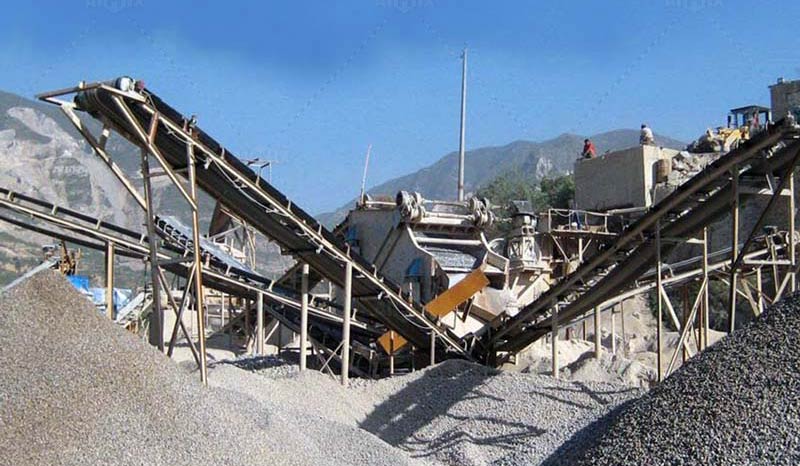
Crusher Type Optimization by Material Category
Primary Crushing Equipment Selection
Jaw Crushers for Abrasive, Hard Rock
Jaw crushers remain the predominant choice for primary reduction of hard, abrasive materials due to their mechanical simplicity and ability to handle large feed sizes. Modern designs feature improved kinematics that increase capacity while reducing wear, with some models achieving reduction ratios up to 8:1. Their straightforward design facilitates maintenance and minimizes operational complexity, though they typically produce more elongated particles than other crusher types.
Gyratory Crushers for High-Capacity Operations
For large quarries processing over 1000 tons per hour, gyratory crushers offer superior throughput and reduced operational costs per ton. Their continuous crushing action and higher volumetric capacity make them ideal for processing homogeneous materials like limestone and dolomite. Advanced models feature automated setting regulation that maintains optimal performance as wear occurs, ensuring consistent product gradation throughout the liner life.
Secondary and Tertiary Crushing Configurations
Cone Crushers for Precision Reduction
Secondary cone crushers excel at producing well-shaped aggregates with minimal flakiness, particularly valuable for asphalt and concrete applications. Modern hydrocone designs incorporate advanced chamber geometries and crushing dynamics that optimize particle shape while controlling top size. Their ability to operate in closed-circuit configurations with screening equipment makes them indispensable for producing precisely graded products.
Impact Crushers for Soft to Medium Materials
For processing softer materials like limestone and sandstone, impact crushers offer superior reduction ratios and excellent particle shape. Their high-speed impact crushing action produces cubical products ideal for concrete and asphalt production. Recent advancements include hybrid designs that combine impact and compression crushing principles, extending application range while maintaining the benefits of impact crushing for product shape.

Capacity Matching and Circuit Design
Systematic Throughput Optimization
Balancing Primary and Secondary Stages
Effective crushing plant design requires meticulous capacity matching between primary, secondary, and tertiary stages. The primary crusher should operate at 75-85% capacity to accommodate surge periods, while secondary crushers typically perform best at 80-90% capacity. This staged approach prevents bottlenecks and ensures optimal utilization of each crushing stage, maximizing overall plant efficiency.
Automation and Control Systems
Modern crushing plants incorporate sophisticated automation that continuously monitors and optimizes crusher performance. These systems adjust aggregate crusher settings in real-time based on power draw, cavity level, and product quality measurements. By maintaining optimal operating parameters, automation increases throughput by 5-15% while reducing energy consumption and wear costs through consistent operation.
Operational Considerations and Maintenance Planning
Wear Management and Cost Control
Liner Selection and Replacement Strategies
The economic viability of crushing operations heavily depends on effective wear management. Manganese steel remains standard for most applications, but specialized alloys and composite materials offer extended service life for particularly abrasive applications. Progressive quarry operators implement predictive maintenance programs that schedule liner changes based on actual wear rather than fixed time intervals, maximizing component life while preventing unexpected failures.
Energy Efficiency Optimization
Crushing typically accounts for 40-50% of a quarry's energy consumption, making efficiency improvements particularly valuable. Crusher selection significantly influences energy usage, with newer designs often reducing power requirements by 15-30% compared to older models. Operating crushers at their optimal parameters—correct speed, appropriate feed distribution, and proper closed-side settings—further enhances energy efficiency while maintaining product quality.
The art and science of crusher selection involves balancing numerous variables to create an efficient, cost-effective crushing circuit. By carefully matching crusher type and capacity to material characteristics, quarry operators can achieve significant improvements in productivity, product quality, and operational costs. The most successful operations view their crushing plant not as static equipment but as a dynamic system that requires continuous optimization and adaptation to changing conditions and requirements.