The modern built environment rests quite literally upon a foundation of aggregate—the sand, gravel, and crushed stone that form concrete, asphalt, and road base. It is a resource so ubiquitous it becomes invisible, and the machinery that produces it is often relegated to a peripheral rumble in a distant quarry. This perception is a profound error. Gravel crusher machine is not merely loud, dusty pieces of industrial equipment; they are the indispensable primary processors of our physical world. To dismiss them as simple rock smashers is to fundamentally misunderstand the precision and engineered complexity required to transform blasted bedrock or river-run cobbles into the graded, specification-specific materials that underpin safe and durable construction. Their operation is a sophisticated interplay of physics and mechanical force, and their essentiality extends far beyond the quarry wall, influencing the cost, sustainability, and very feasibility of infrastructure projects globally.
The Mechanical Doctrine of Size Reduction
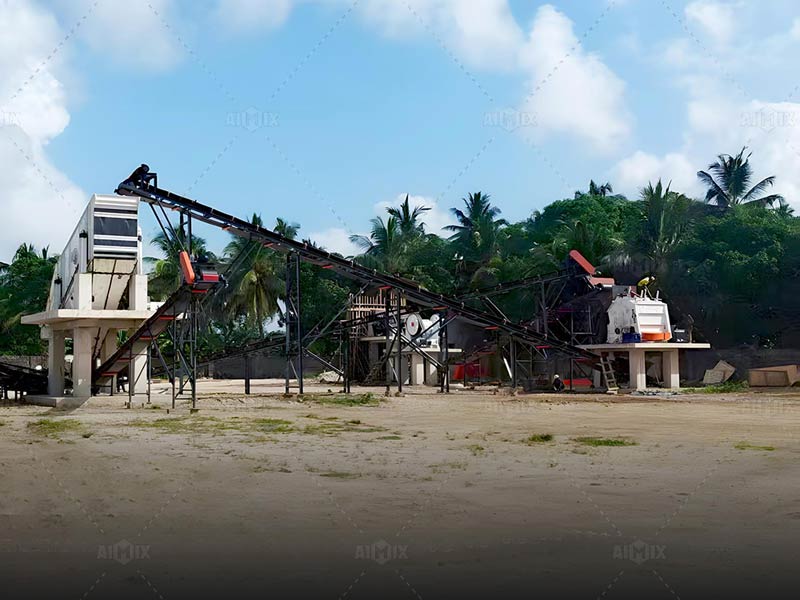
At its core, a crusher's purpose is the systematic comminution of large rock into smaller, usable fragments. This is not a haphazard act of destruction but a controlled application of force. Different crusher types achieve this through distinct mechanical principles, each suited to a specific stage in the crushing circuit.
Jaw Crushers: The Primary Compressors
Functioning as the typical first line of engagement, the jaw crusher operates on a straightforward but immensely powerful principle. A fixed jaw acts as an anvil, while a moving jaw, articulated in an elliptical motion, applies compressive force directly to the rock. This intermittent compression is akin to a giant, mechanized nutcracker. The geometry of the crushing chamber is critical, designed to create a progressive reduction as rock moves downwards, and to allow smaller, crushed material to exit through a gap at the bottom. Their robustness makes them ideal for the initial breakdown of very large feed material, but they offer less control over the final product shape, which can be angular and slabby.
Cone Crushers: The Secondary Refiners
For further refinement, cone crushers take the stage. Here, the crushing action is continuous. A gyrating mantle spins within a concave bowl, creating a progressively narrower gap. Rock is crushed not just by compression, but by interparticle attrition—rocks crushing other rocks as they are squeezed between the mantle and bowl liners. This results in a more consistent, cubical product ideal for high-quality concrete aggregate and asphalt. The hydraulic adjustment of the bowl gap allows for precise control over product size without stopping the machine, a key operational advantage.
Impact Crushers: The Shaping Specialists
When product shape is paramount, impact crushers enter the equation. These machines accelerate rock through a high-speed rotor and hurl it against solid anvils or curtains. This violent kinetic impact shatters the rock along its natural cleavage planes. The repeated collisions within the crushing chamber produce a highly cubical, well-shaped end product with a favorable surface texture for asphalt binder adhesion. However, this method generates more wear on the rock crushing machine's components and can create higher levels of fines, making it less suitable for highly abrasive materials without frequent maintenance.
Arguing Essentiality: Beyond the Obvious Utility
The argument for the essential nature of gravel crushers is often anchored in their obvious function: they make small rocks out of big ones. This is a reductive view. Their true indispensability lies in three interconnected spheres: economic, logistical, and environmental.
The Economic and Logistical Imperative
Consider the alternative: relying solely on naturally occurring sand and gravel deposits. These deposits are geographically finite, often located far from growing urban centers where demand is highest. The cost of transporting bulky, low-value raw material over long distances is economically and energetically prohibitive. Crushers enable proximal resource utilization. They allow quarries to be established near markets, processing local bedrock into aggregate. This drastically reduces transportation costs, a primary component of the final delivered price. Furthermore, crushers create value from waste. Construction demolition concrete, asphalt millings, and quarry overburden can be fed into crushers, creating recycled aggregate. This transforms a disposal liability into a revenue stream and conserves natural virgin deposits.

The Environmental and Engineering Argument
The environmental case is compelling. By enabling local production and recycling, crushers significantly reduce the carbon footprint associated with aggregate transport. More critically, they provide the engineered material necessary for modern infrastructure. A building's foundation, a highway's base layer, and a runway's surface all require aggregates with specific mechanical properties—strength, gradation, and shape. Natural pit-run gravel is inconsistently sized and shaped, often containing deleterious materials. A crusher circuit, through stages of crushing and screening, can reliably and consistently produce a specification-grade material that meets exacting engineering standards. The safety and longevity of every piece of infrastructure depend on this consistency. Without crushers to provide it, we would be building on unreliable ground, incurring higher long-term maintenance costs and safety risks.
A Foundation of Modernity
To view an aggregate crusher as a simple machine is to miss the profound narrative it represents. It is the enabling technology that turns geological matter into civilized infrastructure. Its mechanical doctrine of compression, impact, and attrition is the first step in a value chain that ends with our homes, roads, and cities. The argument for its essentiality is therefore not a technicality, but a recognition of a fundamental industrial truth. These machines answer the dual mandate of economic viability and engineering necessity, providing the tailored, reliable, and sustainable materials upon which progress is literally built. Their relentless operation is not just noise; it is the sound of foundation being laid.